Your pool is part of the Silverleaf lifestyle, but the desert sun can make it an expensive luxury. If your bills climb every summer or the water never seems to hold temperature, you’re not alone. In this guide, you’ll learn the high-impact upgrades, smarter schedules, and local rate strategies that cut energy use without sacrificing comfort. Let’s dive in.
Why Silverleaf pools use more energy
Silverleaf’s large estates and resort-style designs often include multiple water features and lighting that look incredible at night. That beauty comes with higher operating expectations and more equipment to power, as highlighted in recent coverage of the community’s luxury profile. You can see why many owners look for ways to dial in performance and cost in an area known for elevated amenities (Business Insider profile of Silverleaf).
Scottsdale’s hot, dry climate also drives losses. Evaporation removes both water and heat, which means frequent refills, more chemicals, and longer pump and heater run times. The City of Scottsdale estimates that a typical backyard pool can lose thousands of gallons per year to evaporation and recommends covers and water‑saving practices to curb that waste (Scottsdale evaporation guidance).
Biggest energy savers
Install a variable‑speed pump
If you still run a single‑speed pump, this is your biggest win. ENERGY STAR reports that efficient variable‑speed models can cut pump energy by 50 to 80 percent when properly sized and programmed (ENERGY STAR pool pump guidance). Because pump power rises steeply with speed, running longer at a lower speed is far cheaper than short, high‑speed bursts. To estimate your savings for your specific pool and utility rate, try a pump‑savings calculator before you buy (Pentair pump savings calculator).
Dial in your run schedule
Set your schedule to meet required water turnover at the lowest effective speed. Many pools achieve clean, clear water with several hours at low speed instead of 6 or more hours at high speed. Use your automation to spread short runs during heavy‑debris periods so skimming stays effective without a full‑throttle day.
Shift to off‑peak hours
Both major Valley utilities offer time‑of‑use plans that reward you for running big loads when demand is lower. SRP specifically notes pools as great candidates for time‑of‑use savings, so scheduling your longest low‑speed runs overnight can trim bills further (SRP Time‑of‑Use overview). If you heat your pool with a heat pump, run it during the warmest off‑peak windows to boost efficiency.
Cover the pool to cut evaporation
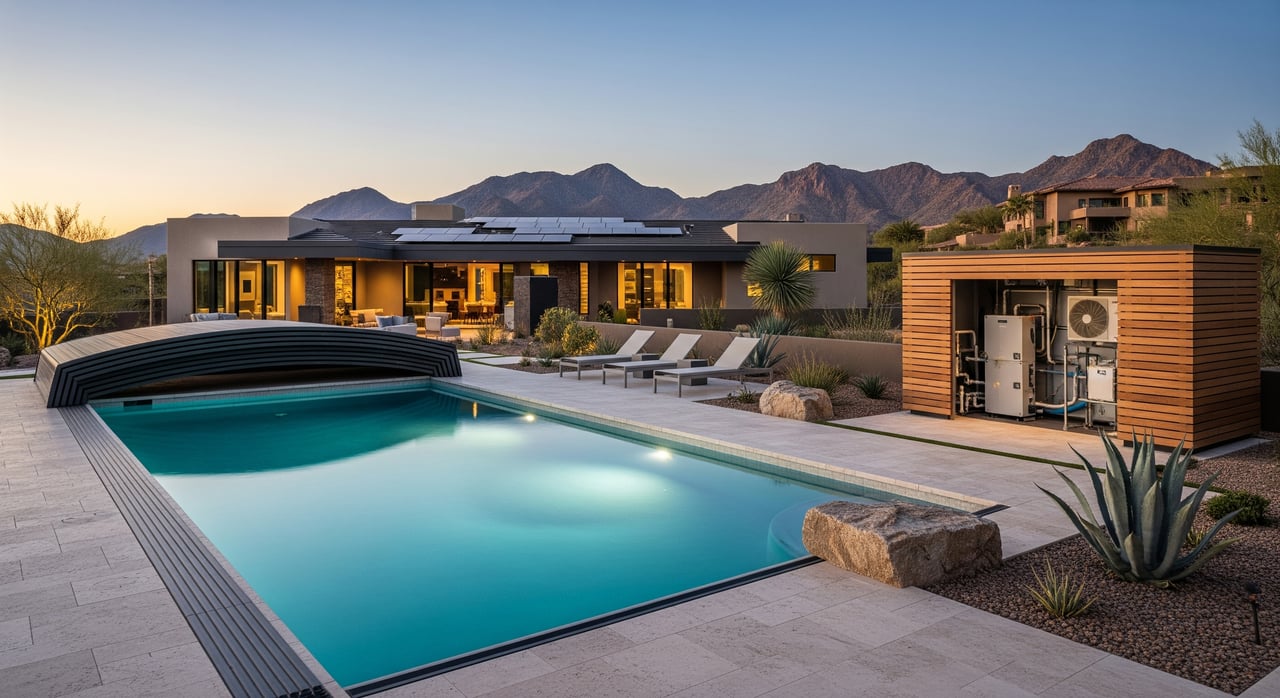
Evaporation is energy leakage. A solar or standard cover keeps heat and water where they belong, so your heater and pump work less. In Scottsdale’s abundant sun, a cover can also help nudge daytime temperatures up, making your pool more comfortable with little or no added energy (City of Scottsdale tips on evaporation).
Heat the smart way in a warm climate
Heat‑pump pool heaters move heat from the air to your water and perform very well in Arizona’s mild winters and warm shoulder seasons. The U.S. Department of Energy notes that heat pumps often cost much less to operate than gas for sustained heating, while gas heaters excel at quick on‑demand boosts (DOE heat pump pool heater guide). Solar thermal collectors are another low‑operating‑cost option in our sunny region if your roof or yard layout allows.
Swap to LED pool lighting
LED pool lights use far less electricity than halogen or incandescent fixtures and last longer. Industry reporting shows savings that can reach 70 to 90 percent, which adds up fast if you enjoy evening ambiance or have multiple fixtures (LED pool lighting comparison). When a fixture fails, upgrade to LED rather than replacing like‑for‑like.
Tune features, hydraulics, and maintenance
- Limit always‑on water features. Fountains and spillways look great but increase evaporation, heating needs, and pump time. Run them for entertaining, not all day.
- Improve hydraulics. Clean filters, right‑sized piping, and well‑set valves reduce resistance so you can run the pump slower for the same turnover.
- Keep chemistry balanced. A clean, balanced system needs fewer backwashes and refills, which translates into less energy and water use.
Costs, payback, and comfort
- Variable‑speed pump: Expect roughly $800 to $2,500 installed depending on size and installer. Many homeowners see a 1 to 4‑year payback from energy savings, especially when paired with time‑of‑use scheduling and any available utility rebates. Use a calculator for your parcel to model savings (Pentair calculator; ENERGY STAR guidance).
- Heat‑pump pool heater: Upfront cost is typically higher than gas, but DOE examples show annual operating costs can be hundreds to more than $1,000 lower depending on your target temperature, season length, and whether you use a cover (DOE heat pump heater guide).
- LED lighting: LEDs often deliver a simple 1 to 2‑year payback based on energy saved and longer life compared with halogen (LED savings overview).
Your actual payback depends on your electricity rate, run schedule, pool volume, and equipment setup. A brief assessment with a qualified pool pro who will size and calibrate your pump is well worth it.
Rebates and rate plans to check
Start by confirming your electric provider for your exact address, since parts of Scottsdale are served by different utilities. You can verify service areas and plan options directly with your utility or by checking SRP’s service information as a first step (SRP service overview).
- Utility rebates: In recent years, local programs have commonly offered about $150 to $300 for qualifying variable‑speed pumps and around $75 for timers, typically requiring installation or calibration by a participating dealer. Program amounts change, so confirm current details before you buy (coverage of SRP’s Energy‑Efficient Pools program).
- Time‑of‑Use plans: TOU pricing makes off‑peak electricity cheaper. Pools are ideal loads to shift into off‑peak windows for meaningful savings (SRP Time‑of‑Use overview).
- Federal/state incentives: Depending on timing and equipment, credits may apply to clean energy upgrades like certain heat pumps or solar. Arizona’s Clean Energy Hub summarizes current credit categories and links to official guidance. Always verify eligibility and amounts before purchasing (Arizona Clean Energy Hub).
Weekly and seasonal checklist
- Confirm your utility and review current TOU plans and any qualifying pump or timer rebates before upgrading equipment (SRP service overview).
- Audit your setup: pump size and type, pool volume, filter type, booster pumps, heater type, and light fixtures.
- Program the pump: target turnover at the lowest effective speed; schedule most runtime off‑peak.
- Use a cover when the pool is not in use to reduce evaporation and heating.
- If heating: compare heat pump, gas, and solar for your season length; include the impact of a cover (DOE heat pump guide).
- Upgrade to LED fixtures as bulbs or housings reach end of life (LED comparison).
- Trim runtime for decorative features and consider windbreaks that reduce evaporation, balancing against debris.
Get sale‑ready with smart upgrades
Energy‑savvy pools are a selling point in Silverleaf. Buyers appreciate quieter variable‑speed pumps, LED ambiance with low operating costs, and a pool that holds temperature without waste. If you’re considering a sale or a strategic refresh, prioritize upgrades with clear ROI and document utility bills before and after to showcase savings.
For design‑forward guidance, vetted contractor referrals, and a plan that pairs curb appeal with measurable returns, connect with Brent Benger. You’ll get concierge support from pre‑sale improvements to polished marketing that highlights your home’s lifestyle story.
FAQs
How can I cut pool energy use in Scottsdale’s climate?
- Focus on a variable‑speed pump, off‑peak scheduling, a reliable cover, and LED lighting; these measures address the desert’s evaporation and long run‑time needs using proven, efficient tech.
Are variable‑speed pumps actually worth it for Silverleaf homes?
- Yes for most pools; ENERGY STAR reports 50 to 80 percent pump energy reductions when sized and programmed correctly, often paying back in 1 to 4 years depending on rates and usage (ENERGY STAR guidance).
What is the best way to heat a pool in Scottsdale?
- In our warm climate, heat‑pump pool heaters often have the lowest ongoing cost for steady heating; gas is best for quick boosts, and solar thermal can be a solid seasonal extender (DOE heat pump guide).
How does a pool cover save money in the desert?
- A cover reduces evaporation, which carries away heat and water; keeping that in the pool cuts heater run time, chemical loss, and refill needs (Scottsdale evaporation tips).
Which utility programs should I check before upgrading my pool equipment?
- Review your utility’s current time‑of‑use plans and any rebates for variable‑speed pumps or timers; SRP’s materials and local coverage highlight pool‑focused savings opportunities (SRP TOU overview; SRP program coverage).